
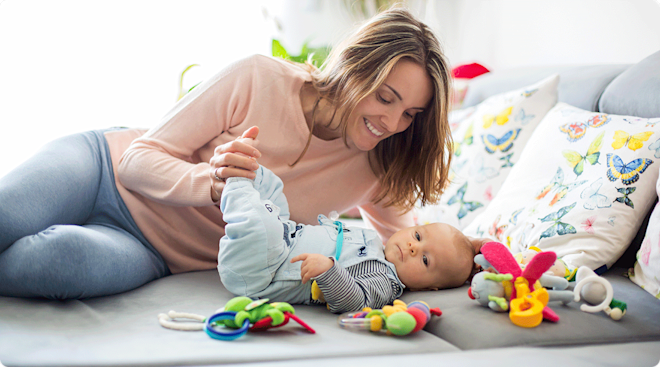
Have you ever wondered if your newborn is ready to play with toys? You might think toys are just for older babies, but even the tiniest hands and curious eyes are eager to explore.
Understanding when and how your newborn interacts with toys can help you support their growth and keep them happy. Keep reading to discover what kinds of toys truly catch your baby’s attention and how these simple playthings can make a big difference in their early development.
When Newborns Start Playing
Newborns do not play with toys like older babies. Their play starts with simple movements. It takes time for them to interact with toys.
Understanding when newborns begin to play helps parents support their growth. Play starts as they become aware of their body and surroundings.
Early Reflexive Movements
Newborns show reflexive movements from birth. These are automatic actions like grasping or sucking. They are not true play but important for development.
These reflexes help babies discover their hands and feet. They start to move and respond to touch and light.
- Rooting reflex helps babies find the nipple
- Grasp reflex causes them to hold objects placed in their hand
- Moro reflex makes them react to sudden movements
Awareness Of Surroundings
By around 6 to 8 weeks, babies become more aware of what is around them. They start to focus on faces and bright objects.
This awareness is the beginning of play. Babies watch and reach for toys that catch their attention.
- Babies follow moving objects with their eyes
- They start to smile at familiar faces
- Babies may try to reach or bat at toys

Credit: arirotoys.com
Types Of Toys Suitable For Newborns
Newborns begin to explore the world through their senses. Toys help them learn and grow safely. It is important to choose toys that match their stage of development.
Safe, soft toys and those that stimulate vision and touch are best for newborns. These toys support early learning and comfort.
Soft And Safe Toys
Newborns need toys that are gentle and free from small parts. Soft toys made from natural materials are ideal. They provide comfort and are safe to hold and mouth.
Look for toys with no sharp edges or choking hazards. Stuffed animals, soft dolls, and fabric rattles are good choices. These toys help babies feel secure and calm.
- Plush stuffed animals
- Soft fabric dolls
- Cloth rattles
- Knitted or crocheted toys
Visual Stimulation Toys
Newborns see high contrast colors best. Toys with black, white, and bright colors help develop their vision. Simple patterns like stripes and circles catch their attention.
Visual toys encourage babies to focus and track objects. Mobiles, picture cards, and toys with bold patterns are perfect. These toys support eye muscle development and concentration.
- Black and white mobiles
- Brightly colored rattles
- High contrast picture cards
- Simple patterned cloth books
Tactile Sensory Toys
Touch is a key sense for newborns. Toys with different textures help them explore. Smooth, bumpy, soft, and crinkly surfaces teach babies about the world.
These toys develop fine motor skills and curiosity. Soft blocks, textured balls, and fabric books with tags are great options. They encourage babies to touch and hold.
- Textured soft blocks
- Fabric books with different materials
- Crinkly cloth toys
- Soft balls with bumps
How Newborns Interact With Toys
Newborns start to explore their world through simple interactions. Toys help with this early learning process.
Though limited, newborns show interest in toys by touching, looking, and holding them.
Grasping And Holding
At first, newborns have a reflex to grasp objects placed in their hands. This helps develop muscle strength.
- Newborns may hold toys briefly without control.
- They learn to open and close their hands around objects.
- Holding toys encourages hand-eye coordination.
Visual Tracking
Newborns watch moving toys to practice focusing and following objects with their eyes.
| Age (Weeks) | Tracking Ability |
| 0-2 | Focus on faces and bright objects |
| 3-4 | Follow slow-moving toys side to side |
| 5-6 | Track objects in larger arcs |
Tactile Exploration
Touch helps newborns learn about different textures and shapes of toys.
Toys with varied surfaces like soft, smooth, or bumpy are ideal. These features include:
- Plush fabric
- Rubbery bumps
- Plastic rings
- Ribbons or tags
Benefits Of Toy Play For Newborns
Newborns may seem too young to play with toys. Yet, simple toys can help their growth. Toy play supports many areas of a baby’s development.
Toys designed for newborns are safe and easy to hold. These toys encourage babies to explore and learn about their world.
Motor Skill Development
Toys help babies practice moving their hands and fingers. Grabbing, shaking, and holding toys build strong muscles.
These movements improve hand-eye coordination. They prepare babies for later skills like writing and eating.
- Reaching for toys strengthens arm muscles
- Holding toys improves finger control
- Shaking toys helps wrist movement
Sensory Stimulation
Toys with different colors, shapes, and textures excite a baby’s senses. Bright colors catch their eyes and keep attention.
Soft or bumpy textures feel interesting to touch. Sounds from rattles or crinkles help babies learn about noise and cause-effect.
- Colorful toys improve vision
- Textured toys develop touch sense
- Sound toys teach hearing skills
Emotional Comfort
Toys provide a sense of safety and calm. Babies often find comfort in holding or cuddling soft toys.
Playing with familiar toys can soothe fussiness. It helps babies feel happy and secure.
Signs Your Newborn Enjoys Toy Play
Newborns explore the world through their senses. Toys can catch their attention and encourage learning.
Watching how your baby reacts to toys helps you know if they enjoy playtime.
Increased Alertness
Your baby may open their eyes wider and focus on toys. They stay awake longer and watch carefully.
- Eyes follow moving objects
- Focuses on bright colors or lights
- Shows interest in new shapes or sounds
Smiling And Vocalizing
Babies show joy by smiling or making sounds. These are signs they like the toy or the playtime.
| Behavior | What It Means |
| Smiling | Baby feels happy and safe |
| Coos or gurgles | Baby tries to communicate |
| Laughing | Strong pleasure and engagement |
Reaching And Grabbing
Babies start to move their hands toward toys. This shows they want to touch and explore.
Signs your newborn reaches for toys:
- Stretching arms toward objects
- Opening hands to grab
- Holding toys briefly

Credit: www.itzyritzy.com
Tips For Choosing Newborn Toys
Choosing the right toys for newborns helps support their growth. Toys can encourage senses like touch, sight, and hearing.
It is important to pick toys that are safe and suitable for a baby’s age and stage.
Safety Considerations
Safety is the top priority when choosing toys for newborns. Babies explore toys by putting them in their mouths.
- Choose toys without small parts that can be choking hazards.
- Make sure toys are free from sharp edges or points.
- Check that toys are made from non-toxic materials.
- Look for toys that are easy to clean and disinfect.
Age-appropriate Features
Toys should match the baby’s current abilities and senses. This helps them learn and enjoy playtime.
| Age | Recommended Toy Features |
| 0-3 months | High-contrast colors, soft textures, rattles |
| 3-6 months | Graspable shapes, teething toys, gentle sounds |
| 6-12 months | Stacking toys, cause-and-effect toys, safe mirrors |
Material And Design
Materials must be safe and gentle for newborns. Design should support easy handling and sensory exploration.
Look for these qualities in toys:
- Soft fabrics that feel nice on skin
- Durable plastic with smooth surfaces
- Bright but safe colors without harmful dyes
- Simple shapes that fit small hands
Common Myths About Newborn Play
Many people have ideas about how newborns play. Some of these ideas are not true. It is important to know the facts about newborn play.
This helps parents and caregivers support babies in the best way. Let’s look at two common myths about newborns and toys.
Newborns Don’t Need Toys
Some believe newborns do not need toys. They think babies only need to eat and sleep. But toys can help babies learn and grow.
Simple toys with bright colors or soft textures catch a baby’s attention. These toys help babies practice looking, touching, and holding. Toys support early brain development.
- Toys help babies explore their senses
- They encourage movement and coordination
- Toys can comfort and calm newborns
Toys Overstimulate Babies
People often worry that toys overstimulate newborns. They think babies get too excited or tired. But gentle play with toys is good for babies.
It is important to watch the baby’s reactions. If a baby looks upset or tired, it is time to rest. Toys that are simple and soft are best for newborns.
- Choose toys with soft sounds or textures
- Limit playtime to short, calm sessions
- Pay attention to baby’s mood and needs

Credit: babyenroute.com
Frequently Asked Questions
Do Newborns Enjoy Playing With Toys?
Newborns are naturally curious but have limited interaction with toys. They mainly respond to bright colors and soft textures, which help stimulate their senses and encourage early development.
When Do Newborns Start Playing With Toys?
Newborns begin to engage with toys around 2 to 3 months old. At this stage, they start tracking objects and grasping soft toys, enhancing their motor skills and hand-eye coordination.
What Types Of Toys Are Best For Newborns?
Soft, colorful, and lightweight toys are ideal for newborns. Toys with different textures, sounds, and high-contrast patterns help stimulate their senses and support early cognitive growth.
Can Toys Help Newborns Develop Motor Skills?
Yes, toys encourage newborns to reach, grasp, and explore. These actions support fine motor skills and hand-eye coordination essential for their overall development.
Conclusion
Newborns can benefit from simple toys. They stimulate senses and promote growth. Soft rattles and plush toys are great choices. They offer comfort and engagement. Interaction with toys boosts cognitive development. Parents should select age-appropriate toys. Safety is a top priority.
Always check for small parts and choking hazards. Quality time with toys strengthens bonding. While newborns don’t actively play, toys still aid development. Encourage exploration with safe, colorful toys. Enhance their world gently. Remember, every little interaction counts. Embrace these moments and watch your baby thrive.