
Have you ever wondered when your baby will start playing with toys? Watching infants explore and interact with objects is one of the most exciting milestones for parents.
But knowing exactly when your little one will begin to enjoy toys can help you choose the right ones at the right time. You’ll discover the key stages when infants start playing, how this play supports their growth, and what you can do to encourage their development.
Keep reading to unlock the secrets of your baby’s playtime and make every moment count.
Early Toy Interaction
Infants start playing with toys very early in life. Their first interactions are simple and based on natural reflexes. Toys help babies learn and explore their world step by step.
Understanding these early stages can help parents choose the right toys. It also shows how babies develop motor skills and focus.
Reflexive Grasping
Newborns have a natural reflex to grab objects placed in their hands. This reflex is called reflexive grasping. It is not intentional but a basic response.
- This grasp helps babies hold soft toys or rattles.
- It strengthens their hand muscles.
- It starts to build coordination needed for later play.
- Reflexive grasping usually fades around two months old.
Visual Tracking
Visual tracking means a baby’s ability to follow moving objects with their eyes. It is an important skill for early play and learning.
| Age | Visual Tracking Ability |
| 0-1 Month | Can only follow slow movement briefly |
| 2-3 Months | Follows moving toys smoothly |
| 4-6 Months | Tracks objects in wider range and speed |
Toy Exploration Milestones
Infants start to explore toys as they grow and develop new skills. Playing with toys helps babies learn about their world. Each stage shows new ways babies interact with objects.
These milestones include reaching, holding, banging, shaking, passing, and transferring toys. Watching these actions helps caregivers understand a baby’s growth.
Reaching And Holding
At about 3 to 4 months, babies begin to reach for toys. They start to grab and hold objects with their hands. This skill improves hand-eye coordination and muscle strength.
- Reaches out to touch toys
- Grasps objects with fingers
- Holds toys briefly before dropping
- Improves grip over time
Banging And Shaking
From 6 to 9 months, babies often bang and shake toys. They learn cause and effect by making sounds. This action also helps develop motor skills and attention.
| Age | Action | Purpose |
| 6 months | Bangs toys on surface | Explores sound and movement |
| 7-8 months | Shakes rattles | Understands cause and effect |
| 9 months | Bangs with more control | Improves hand strength |
Passing And Transferring
Between 9 and 12 months, babies begin passing toys from one hand to the other. This skill shows better coordination and brain development. It also helps babies learn to share and explore objects more fully.
Common passing and transferring actions include:
- Moving toys between left and right hands
- Handing toys to adults or other children
- Using both hands to explore a single toy
- Improving finger dexterity
Social Play And Communication
Infants begin to explore social play and communication through toys. These activities help them learn how to connect with others.
Toys encourage babies to interact, listen, and share. This helps build their social and communication skills.
Imitative Play
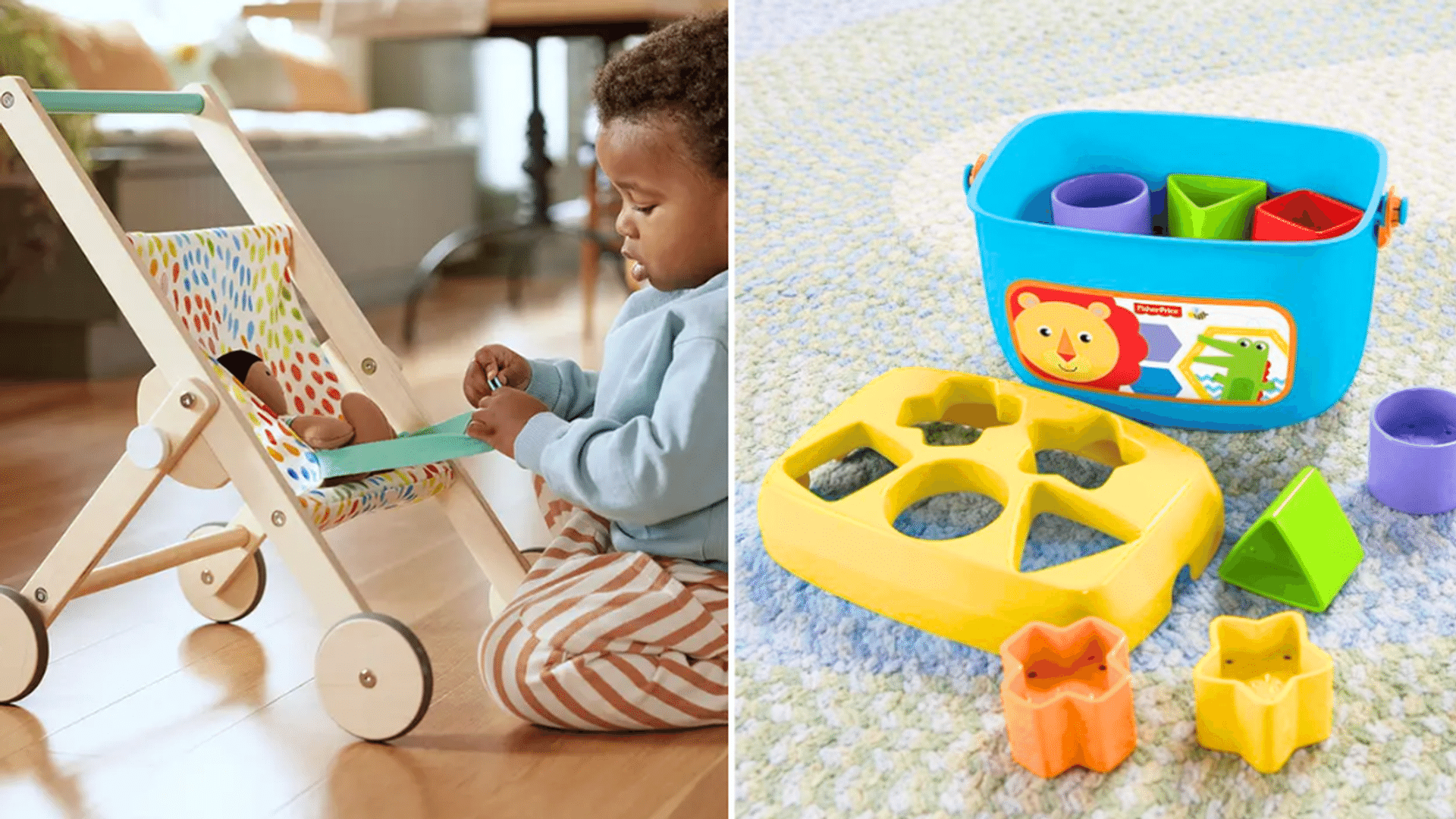
Infants often copy actions they see from adults or other children. Imitative play helps babies learn social behavior.
Using toys like dolls or phones, babies practice gestures and sounds they observe. This builds their communication skills.
Responding To Sounds
Infants react to sounds made by toys or people. This response shows they are learning to communicate.
Babies may turn their head or smile when they hear a noise. This interaction supports their social play development.
Sharing Toys
Sharing toys is an early way infants learn to play together. It teaches them about giving and taking turns.
Babies show interest in the same toy and may pass it to a friend or adult. This action builds social skills.
- Encourages cooperation
- Develops empathy
- Improves communication

Credit: babymore.co.uk
Choosing Age-appropriate Toys
Infants start playing with toys as they grow and learn about the world. Picking toys that match their age helps keep them safe and happy.
Age-appropriate toys support a child’s skills and make playtime fun. Parents should watch their baby’s interests and abilities.
Safety Considerations
Safety is the top priority when choosing toys for infants. Toys should not have small parts that babies can swallow.
Look for toys made from non-toxic materials and those that are easy to clean. Check labels for age recommendations.
- Avoid toys with sharp edges or loose parts
- Choose toys that are sturdy and durable
- Ensure toys meet safety standards
Stimulating Development
Toys help babies develop skills like hand-eye coordination and problem-solving. Choose toys that match their current abilities.
Simple puzzles, stacking blocks, and soft books encourage learning and growth. Change toys as the baby grows to keep them challenged.
- Rattles for grasping and shaking
- Stacking rings for fine motor skills
- Soft books for early language
Sensory Variety
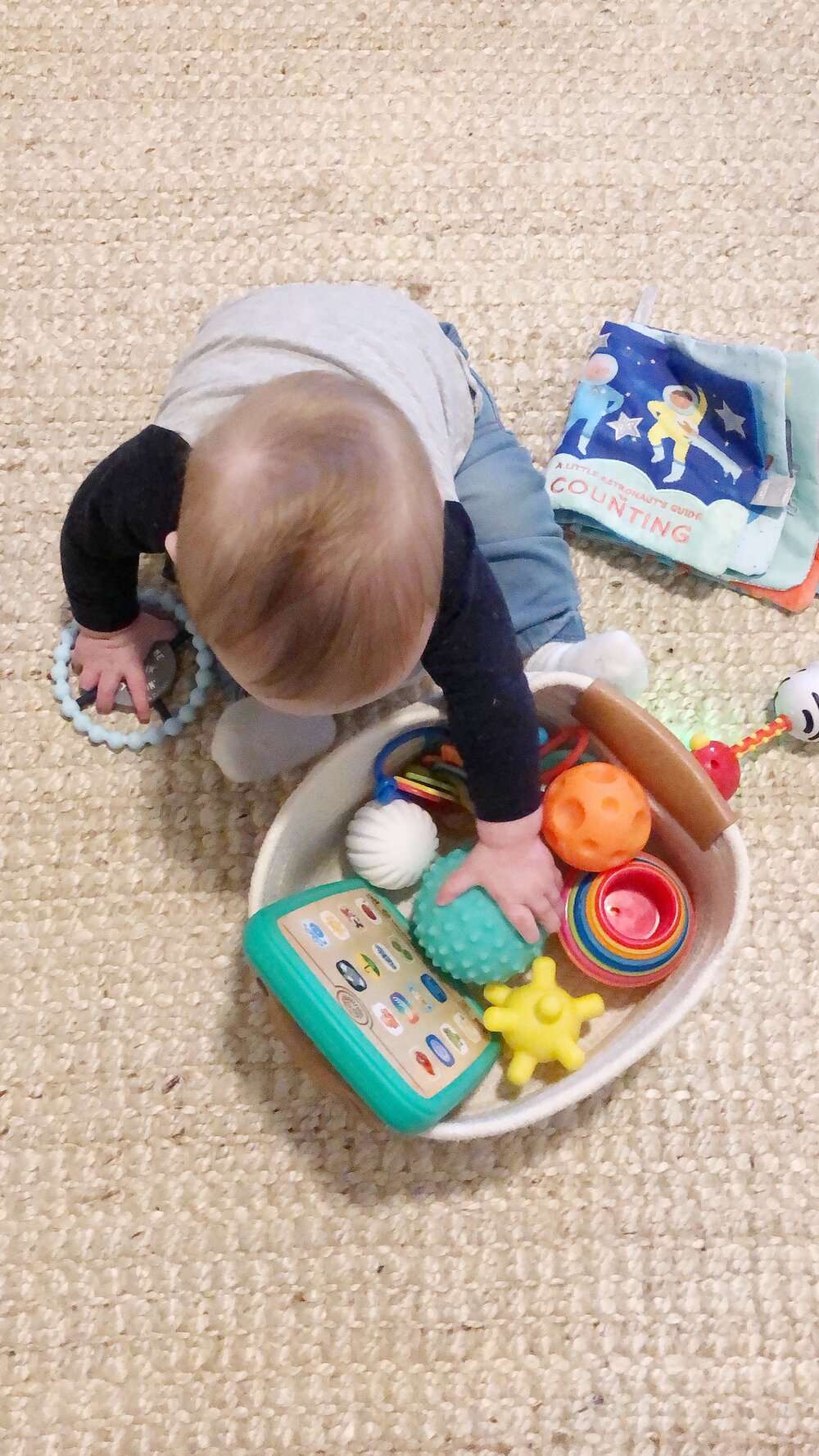
Babies learn through their senses. Toys that offer different textures, sounds, and colors help stimulate their senses.
Mix soft, rough, smooth, and noisy toys to keep babies interested. Sensory variety helps with brain development and exploration.
- Toys with bright colors to attract attention
- Textured toys to feel and touch
- Toys that make gentle sounds or music
Encouraging Playtime
Playtime is important for infants to learn and grow. Toys help develop their senses and skills. Parents can encourage infants to explore and enjoy play safely.
Setting up a good play environment and joining in can make play more fun. It also helps build a strong bond between the infant and caregiver.
Creating A Play Space
Choose a safe, clean area with soft flooring. Keep toys within reach but not crowded. Good lighting helps infants see colors and shapes better.
- Use a soft mat or rug for comfort
- Place age-appropriate toys nearby
- Remove small objects to avoid choking hazards
- Keep the area free from sharp edges
Interactive Play Tips
Talk and sing to your infant during play. Show how to use toys and encourage them to try. Use simple words and repeat sounds to help language skills.
| Tip | Reason |
| Make eye contact | Builds trust and attention |
| Use bright colors | Attracts infant’s interest |
| Repeat actions | Helps learning and memory |
| Offer choices | Encourages decision-making |
Balancing Screen And Toy Time
Limit screen time to short periods for infants. Toys provide hands-on learning that screens cannot. Balance helps infants develop physically and mentally.
Here are some ways to balance screen and toy time:
- Set specific times for screen use
- Choose educational content if using screens
- Encourage more play with physical toys
- Join your infant during play and screen time
Credit: blueprintbykelly.com
Recognizing Play Preferences
Infants start playing with toys at different stages. Watching how they play helps adults understand their likes. Recognizing their play preferences supports healthy growth and learning.
Each baby shows interest in different toys. Some like colors, others like sounds or textures. Observing these choices lets caregivers pick the best toys for the child.
Observing Interests
Pay close attention to the toys infants reach for or smile at. Their eyes and hands show what they enjoy. Toys with bright colors or soft textures often attract their attention first.
Notice if the baby prefers toys that make noise or ones that they can hold and chew. These clues help identify what type of play they like most.
- Watch which toys the infant touches repeatedly
- Look for smiles or excitement when a toy is near
- Notice if the baby tries to move or shake a toy
- See if they focus on certain colors or shapes
Adapting To Changing Needs
As babies grow, their play changes. They may lose interest in old toys and want new challenges. Caregivers should offer toys that match the baby’s current skills and curiosity.
Changing the toys helps keep playtime fun and supports development. Toys that move from simple to complex can guide infants through learning steps.
- Provide toys that encourage crawling or grasping
- Swap soft toys for ones with buttons or parts to push
- Introduce puzzles or stacking toys as they get older
- Remove toys that no longer interest the infant

Credit: www.thebump.com
Frequently Asked Questions
When Do Infants Start Playing With Toys?
Infants typically begin engaging with toys around 3 to 4 months old. At this stage, they start developing hand-eye coordination. Babies also become interested in exploring textures and colors. It’s important to introduce age-appropriate toys that are safe and stimulating.
This helps in their sensory and cognitive development.
Why Are Toys Important For Infants?
Toys play a crucial role in an infant’s development. They help develop motor skills and hand-eye coordination. Playing with toys also stimulates their imagination and creativity. Additionally, toys can aid in sensory development, allowing infants to explore different textures, sounds, and colors.
Interaction with toys promotes cognitive growth and learning.
What Types Of Toys Do Infants Prefer?
Infants generally prefer toys that are colorful and have different textures. Soft toys and rattles are popular among young babies. Toys that produce sound or have moving parts can capture their attention. It’s essential to choose toys that are safe, non-toxic, and age-appropriate to ensure their safety and enjoyment.
How Do Toys Benefit Infant Development?
Toys benefit infant development by enhancing motor skills and cognitive abilities. They encourage problem-solving and exploration. Toys also promote social interaction when infants play with caregivers or siblings. Sensory toys stimulate sight, sound, and touch, aiding sensory development. Overall, toys contribute to a well-rounded developmental experience for infants.
Conclusion
Infants start playing with toys at different ages. They often show interest around three to six months. Toys help babies learn and explore the world. Simple shapes and colors catch their attention first. Playing supports their motor skills and brain growth.
Parents should offer safe, age-appropriate toys. Watch your baby’s reactions to choose the best ones. Remember, every child grows at their own pace. Enjoy these moments—they build strong bonds and joyful memories. Keep encouraging play to help your baby develop happily.