



Have you ever wanted to create music with a fun and simple instrument? Playing a toy accordion can be just that—an exciting way to bring joy to your day and impress your friends.
Whether you’re a complete beginner or just curious, this guide will show you exactly how to get started. You’ll learn easy steps that make playing feel natural and enjoyable. Ready to discover the magic behind those squeezes and buttons? Keep reading, and you’ll be making music before you know it!

Credit: www.amazon.ca
Choosing The Right Toy Accordion
Playing a toy accordion can be fun and help build music skills. Picking the right one makes learning easier.
There are many types and features to think about. This guide helps you find the best toy accordion for you.
Types Of Toy Accordions
Toy accordions come in different styles. Each has unique sounds and parts to explore.
Choosing the type depends on your age and interest in music. Here are common types:
- Mini Accordions: Small size, easy to hold for young kids.
- Piano Toy Accordions: Have piano keys for simple melodies.
- Button Toy Accordions: Use buttons instead of keys, good for finger coordination.
- Electronic Toy Accordions: Include sounds and lights, often battery-powered.
Key Features To Consider
Look at features that make playing easier and more fun. Comfort and sound quality matter.
These features help you choose the right toy accordion:
- Size and Weight: Should fit your hands and be light to hold.
- Number of Keys or Buttons: More keys mean more notes to play.
- Bellows Quality: Smooth bellows help create better sound.
- Durability: Sturdy build lasts longer with frequent use.
- Sound Options: Some toys offer different sounds or rhythms.
- Ease of Use: Simple controls help beginners learn faster.
Basic Parts And Functions
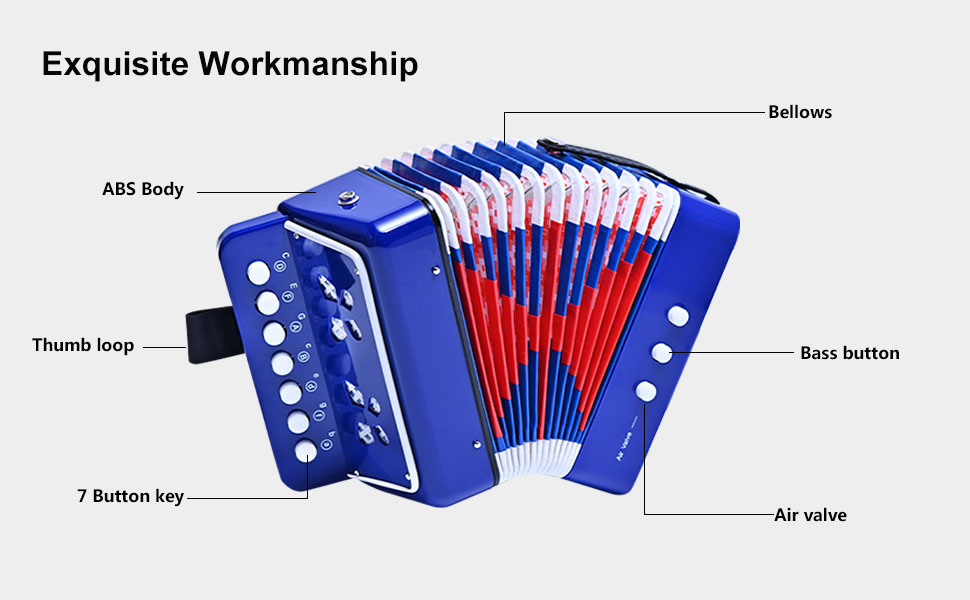
A toy accordion is a small musical instrument made for children. It has simple parts that work together to create sound.
Knowing its parts helps you play it better. The main parts are buttons, keys, and bellows.
Buttons And Keys
Buttons and keys on a toy accordion produce different notes. Pressing them lets air flow through the instrument.
Some toy accordions have buttons on one side and keys on the other. Each button or key plays a different sound.
- Buttons are usually small and round
- Keys look like piano keys and are larger
- Pressing a button or key changes the note
- They control the pitch of the sound
Bellows Operation
Bellows are the part you push and pull to move air inside. This air makes sound when it passes through reeds.
Opening and closing the bellows controls the volume and length of the notes. The faster you move the bellows, the louder the sound.
- Push the bellows inward to close
- Pull the bellows outward to open
- Keep the bellows moving smoothly
- Use bellows and buttons together to play songs
Holding And Positioning
Playing the toy accordion feels easier when you hold it right. Good positioning helps you play better sounds.
Learn how to hold the toy accordion so your hands and body stay relaxed. This guide shows you how.
Proper Hand Placement
Place your left hand on the accordion’s buttons or keys. Your fingers should rest lightly and ready to press.
Your right hand goes on the other side, holding the bellows. Keep your fingers curved and relaxed.
- Use your thumb to support the back of the accordion.
- Keep fingers close to the buttons or keys.
- Do not press too hard; be gentle.
- Move your hands smoothly while playing.
Posture Tips For Comfort
Sit or stand straight to avoid strain. Good posture helps you play longer without tiredness.
Hold the toy accordion close to your body. Keep your shoulders relaxed and arms loose.
- Keep your back straight but not stiff.
- Keep feet flat on the floor if sitting.
- Relax your shoulders down and back.
- Keep the accordion at a comfortable height.

Credit: www.bluebirdlanding.com
Simple Playing Techniques
Playing a toy accordion is fun and easy. You can create music by learning simple techniques.
This guide will help you understand how to use the buttons, keys, and bellows for good sound.
Pressing Buttons And Keys
The buttons and keys on a toy accordion make different notes. Press them gently to play sounds.
Try pressing one button or key at a time. This helps you hear each note clearly.
- Use your fingers to press buttons or keys smoothly.
- Play simple tunes by pressing buttons in order.
- Practice pressing keys softly and then louder.
Controlling The Bellows
The bellows control the air that makes sound in the accordion. Push and pull the bellows slowly.
Try to keep the bellows moving steady. This keeps the music smooth and clear.
- Push the bellows in to make the sound start.
- Pull the bellows out to keep the music going.
- Control speed for soft or loud sounds.
- Practice moving the bellows evenly for better sound.
Learning Easy Tunes
Playing the toy accordion can be fun and simple. Starting with easy songs helps build your skills. You can enjoy music quickly by learning beginner tunes.
This guide shows popular beginner songs and tips for smooth playing. Follow along to practice well and improve your accordion skills.
Popular Beginner Songs
Begin with songs that use simple notes and rhythms. These tunes help you get comfortable with the accordion buttons and bellows.
- Mary Had a Little Lamb
- Twinkle, Twinkle, Little Star
- Old MacDonald Had a Farm
- Row, Row, Row Your Boat
- Happy Birthday
Practice Tips For Smooth Playing
Good practice habits improve your sound and control. Use these tips to play the toy accordion more smoothly.
| Tip | How It Helps |
| Keep your hands relaxed | Reduces tension for better movement |
| Practice slowly at first | Builds accuracy before speed |
| Use steady bellows pressure | Produces even sound volume |
| Repeat short sections | Makes learning easier and faster |
| Listen to recordings | Improves timing and rhythm |
Improving Rhythm And Timing
Playing the toy accordion well means keeping a steady rhythm. Good timing makes your music sound pleasant and smooth.
Practicing rhythm helps you play songs at the right speed. It also trains your ears to hear beats clearly.
Using A Metronome
A metronome is a tool that clicks at regular intervals. It helps you keep a steady beat when playing the toy accordion.
Start slow and listen to the clicks. Play each note with the metronome’s beat to practice timing.
- Set the metronome to a slow speed
- Play one note per click
- Gradually increase the speed as you improve
- Try to keep your playing in sync with the clicks
Counting Beats Effectively
Counting beats helps you understand the rhythm in music. It shows when to play and when to pause.
Use simple numbers like “1, 2, 3, 4” to count the beats in each measure. Clap or tap to feel the rhythm better.
- Count out loud while playing
- Tap your foot to keep steady time
- Break songs into small sections
- Practice each section slowly before speeding up
Troubleshooting Common Issues
Toy accordions can sometimes have problems that stop them from working well. Fixing these issues helps you play better and enjoy the music.
This guide shows easy ways to fix common problems with toy accordions. You will learn how to handle stuck buttons and keep the bellows flexible.
Fixing Stuck Buttons
Buttons on a toy accordion can get stuck if dirt or dust builds up. This stops the sound from coming out properly. Cleaning the buttons helps them move freely again.
Use a soft cloth to wipe the buttons. If a button still sticks, press it gently several times. This can loosen it. Avoid using too much force to prevent damage.
- Wipe buttons with a dry, soft cloth
- Press stuck buttons gently many times
- Keep the accordion in a clean place to avoid dust
- Do not use water or liquids on buttons
Maintaining Bellows Flexibility
The bellows are the part that pushes air through the toy accordion. If they become stiff, the sound will be weak or stop. Keep the bellows soft for good play.
Store the accordion in a dry place. Avoid folding the bellows too hard. Gently open and close them often to keep the material flexible.
- Keep the bellows dry and away from moisture
- Do not bend or fold the bellows sharply
- Open and close the bellows slowly to keep them soft
- Check for holes or tears and repair if needed
Expanding Skills And Repertoire
Playing the toy accordion is a fun way to enjoy music. You can improve your skills by trying new techniques and songs.
Expanding your repertoire helps you play different kinds of music. This keeps your practice interesting and helps you grow as a player.
Advanced Techniques To Try
After learning the basics, try advanced techniques to add more sound and expression. These make your playing richer and more exciting.
Practice bellows control to change volume smoothly. Use finger independence to play faster and clearer melodies.
- Bellows shake to create vibrato effects
- Quick finger movements for trills and runs
- Playing chords with one hand while the other plays melody
Exploring Different Music Styles
Try playing songs from various music styles. This helps you learn new rhythms and sounds.
Start with folk music, then try jazz, pop, or classical pieces. Each style teaches you different skills and ways to play.
- Folk music for simple melodies and rhythms
- Jazz for swing rhythms and improvisation
- Pop songs for catchy tunes and easy chords
- Classical music for precise finger work and dynamics

Credit: www.amazon.ca
Frequently Asked Questions
How Do I Start Playing A Toy Accordion?
Begin by familiarizing yourself with the accordion’s buttons and keys. Practice basic scales and simple tunes. Focus on finger positioning and coordination. Gradually increase complexity as you grow comfortable. Consistent practice will improve your skills. Remember, patience is key to mastering this delightful instrument.
What Are The Basics Of Accordion Maintenance?
Regularly clean the accordion’s exterior and keys with a soft cloth. Store it in a cool, dry place to prevent damage. Check bellows for leaks and keep buttons functioning smoothly. Proper care extends the instrument’s life and ensures optimal performance.
How Can I Improve My Accordion Skills Quickly?
Consistent practice is crucial for improvement. Focus on finger exercises and playing simple melodies. Gradually increase complexity. Listen to accordion music for inspiration and mimic techniques. Consider taking lessons or watching online tutorials to enhance your skills efficiently.
What Types Of Songs Can I Play On A Toy Accordion?
Toy accordions are versatile for various music genres. Start with folk songs, children’s tunes, and simple classical pieces. As you progress, explore pop songs and traditional accordion music. The possibilities are endless, allowing you to enjoy diverse musical styles.
Conclusion
Playing a toy accordion can be fun and simple. Practice squeezing the sides gently to make sound. Try pressing the buttons or keys to create tunes. Remember, patience helps improve your skills over time. Enjoy the music and explore different rhythms.
Share your sounds with family and friends for joy. Keep practicing daily to feel more confident. Playing music brings happiness and relaxes the mind. Start small and build your way up slowly. Have fun with your toy accordion every day!